
 English
 Español
 Pусский
 العربية


Aşındırıcı Akışlı İşleme
Abrasive Flow Machining (AFM) is a non-traditional finishing process used to improve the surface quality of parts that are difficult to machine by conventional methods. It is especially effective for components with complex internal passages, sharp edges, fine burrs, or intricate geometries. In this process, a semi-solid abrasive media is forced through or across the workpiece surface under controlled pressure, gradually removing material by microscopic cutting and polishing action.The basic principle of AFM is relatively simple. A viscous polymer-based media mixed with abrasive particles is pushed through the workpiece using hydraulic or mechanical pressure. As the media flows, the abrasive particles scrape away surface irregularities, high spots, burrs, and roughness peaks. Because the media can conform to the shape of the passage or cavity, AFM is suitable for finishing areas that are inaccessible to standard tools such as grinding wheels, cutting tools, or polishing pads.One of the main advantages of AFM is its ability to produce a very smooth and uniform surface finish. It can significantly reduce surface roughness and improve the performance of precision parts. Better surface finish often leads to improved fatigue life, lower friction, reduced wear, and enhanced fluid flow characteristics. This makes AFM valuable in industries that require high-performance components, such as aerospace, automotive, medical devices, and precision engineering.AFM is also widely used for deburring. During machining, small burrs often form at edges, holes, slots, and intersecting passages. These burrs may interfere with assembly, reduce accuracy, or create safety issues. AFM removes them consistently without damaging the surrounding geometry. Unlike manual deburring, which can be inconsistent, AFM offers a more repeatable and controlled finishing method.The process can be applied in several modes depending on the part geometry and finishing goal. In some cases, the abrasive media is cycled back and forth through the part to improve both internal and external surfaces. In other cases, the media is directed through fixtures or tool paths that concentrate finishing action on specific regions. The size, shape, and hardness of abrasive particles, as well as the viscosity of the media, are selected based on the material being processed and the required finish level.AFM has several limitations. It is not typically used for rapid material removal, since it is a finishing process rather than a primary machining method. The equipment and media can be relatively expensive, and process control is important to achieve consistent results. Careful selection of pressure, cycle time, abrasive type, and media properties is necessary to avoid over-finishing or uneven results.Despite these limitations, Abrasive Flow Machining remains an important advanced manufacturing technique. Its ability to refine complex surfaces, remove burrs, and enhance component performance makes it a powerful solution for modern precision manufacturing.
ürün
sınıflandırma:
-
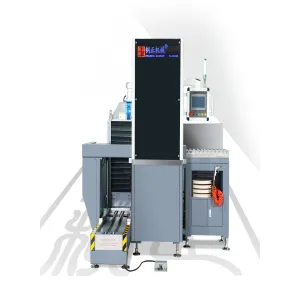
Aşındırıcı Akışlı İşleme
Sınıflandırmaları: Aşındırıcı akışlı işlemeGörünümler: 309Sayı:Bırakma süresi: 2026-06-03 09:25:37Aşındırıcı Akışlı İşleme, ekstrüzyon kalıpları için yüksek hassasiyetli, düzgün parlatma sağlayarak yüzey kalitesini iyileştirir ve aşınmayı en aza indirir. Otomatik çalışma, esnek aşındırıcı teknolojisi ve çeşitli kalıp boyutlarıyla uyumluluk özelliklerine sahiptir.
Haber
sınıflandırma:
-
[Industry News]Aşındırıcı Akışlı İşleme mi Yoksa Manuel Kalıp Parlatma mı D...
2026-06-22 17:35:05 -
[FAQ]Aşındırıcı Akışlı İşleme (AFM) Sistemi Hakkında Sıkça Sorula...
2026-06-23 10:03:33
Dava
sınıflandırma:
Arama sonucu yok!
Video
sınıflandırma:
Arama sonucu yok!
İndir
sınıflandırma:
Arama sonucu yok!
İşe Alım
sınıflandırma:
Arama sonucu yok!
Önerilen ürünler
-
NEWS
Aşındırıcı Akışlı İşleme
Daha fazla bilgi



 Whatsapp
 Telefon
 Posta
Posta